Doctrine
One company in nine costumes
Tesla, SpaceX, Starship, Starlink, Optimus, Neuralink, The Boring Company, X, and xAI look like nine separate companies. They're not. They're integrated arms of one stated mission: make humanity multi-planetary, with a self-sustaining city on Mars by 2050.
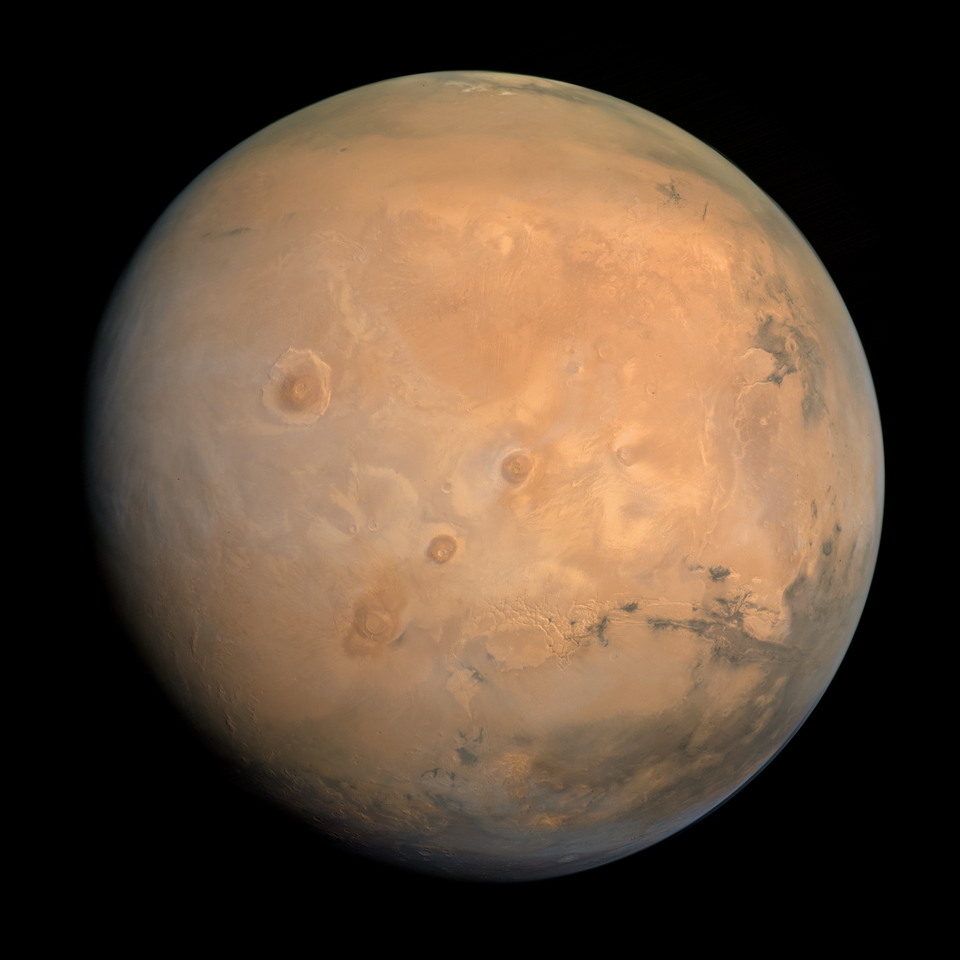
Convergence point
Mars · 2050
Every company below feeds, funds, or constructs a self-sustaining city on Mars.
SpaceX
Founded 2002$1.25T (private)
What it does. Designs, manufactures, and launches the most-flown rocket in history (Falcon 9), the only operational private heavy-lift rocket (Falcon Heavy), and the next-generation fully-reusable Starship system. Operates Crew Dragon for NASA astronaut transport to the ISS.
Role in the Mars play
The transport. Starship is purpose-built to deliver 100+ tonnes of cargo or up to 100 humans to Mars in a single trip. Without SpaceX, the Mars plan has no vehicle.
End goal
Make humanity multi-planetary. The internal target is 1 million people on Mars by 2050 across roughly 1,000 Starship flights.
Starship Program
Founded 2012 (BFR)Inside SpaceX
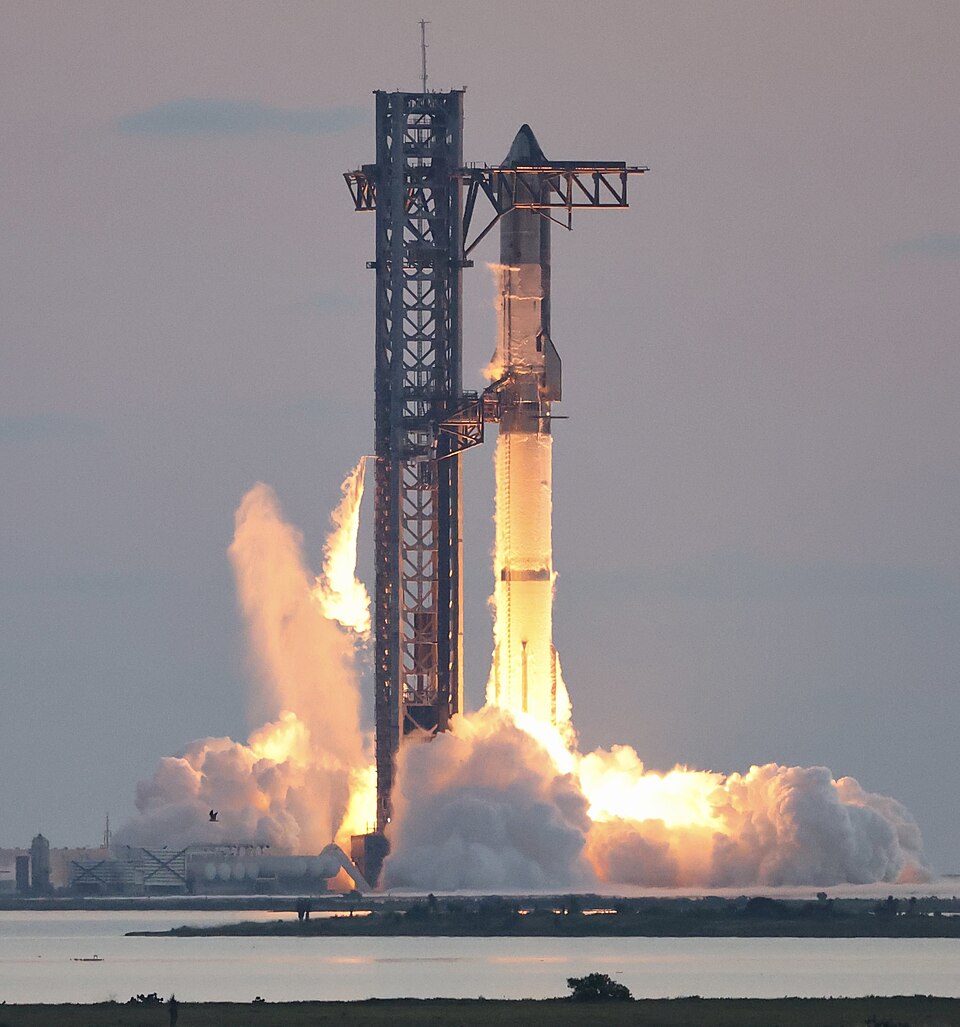
What it does. A two-stage, fully-reusable super heavy-lift launch vehicle. Both Super Heavy booster and Starship upper stage land back at the launch site. Designed for rapid turnaround — the goal is multiple flights per booster per day.
Role in the Mars play
The Mars transport. Each Starship can carry 100–150 tonnes to LEO; with on-orbit refueling, the same ship reaches Mars surface fully loaded. The Mars colony plan requires roughly 1,000 Starship flights.
End goal
Marginal cost per kg to orbit below $100. At that price, building cities off-Earth becomes economically viable.
Starlink
Founded 2015Inside SpaceX
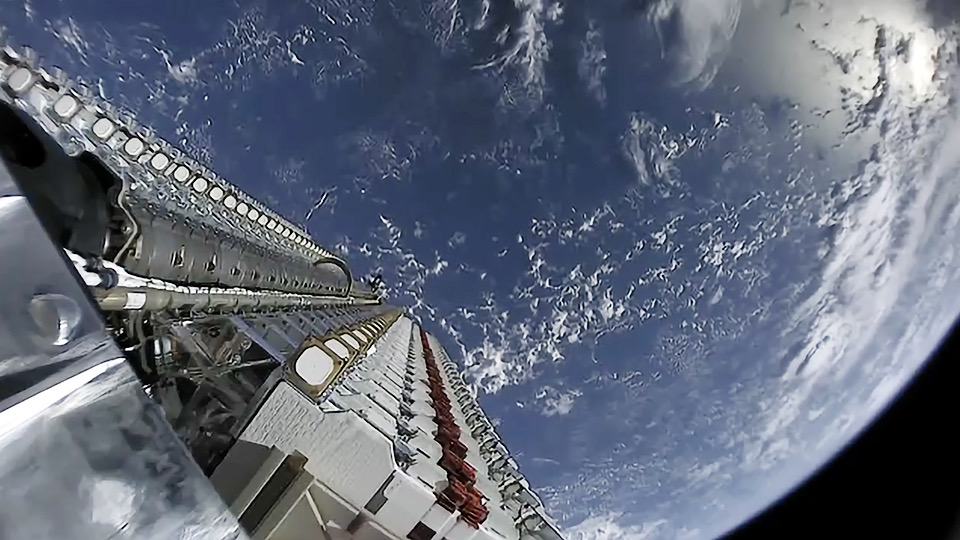
What it does. A constellation of more than 7,000 small satellites in low Earth orbit, providing high-speed broadband to over 5 million subscribers in 100+ countries. Direct-to-cell service launched in 2024.
Role in the Mars play
Pays for SpaceX. Starlink is the cash machine that funds the Mars program — its revenue is reinvested into Starship development. Also: the same satellite-mesh design will be used for Mars-Earth communications.
End goal
Universal global connectivity, deep cash flows for SpaceX, and the protocol stack for an interplanetary internet.
Tesla
Founded 2003 · joined 2004$1.0T (public)
What it does. Designs and manufactures electric vehicles (Model S/3/X/Y, Cybertruck, Cybercab), grid-scale battery storage (Megapack), home batteries (Powerwall), solar roofs, and develops Full Self-Driving software + Dojo training compute.
Role in the Mars play
The energy and AI stack. Solar + Powerwall keep a Mars colony alive. FSD compute and Dojo are the AI substrate. The Cybertruck design is explicitly cited as the off-Earth vehicle template.
End goal
Accelerate the world's transition to sustainable energy. End internal combustion. Become a sustainable-energy + autonomous-AI company that just happens to also make cars.
Optimus (Tesla Bot)
Founded 2021Inside Tesla
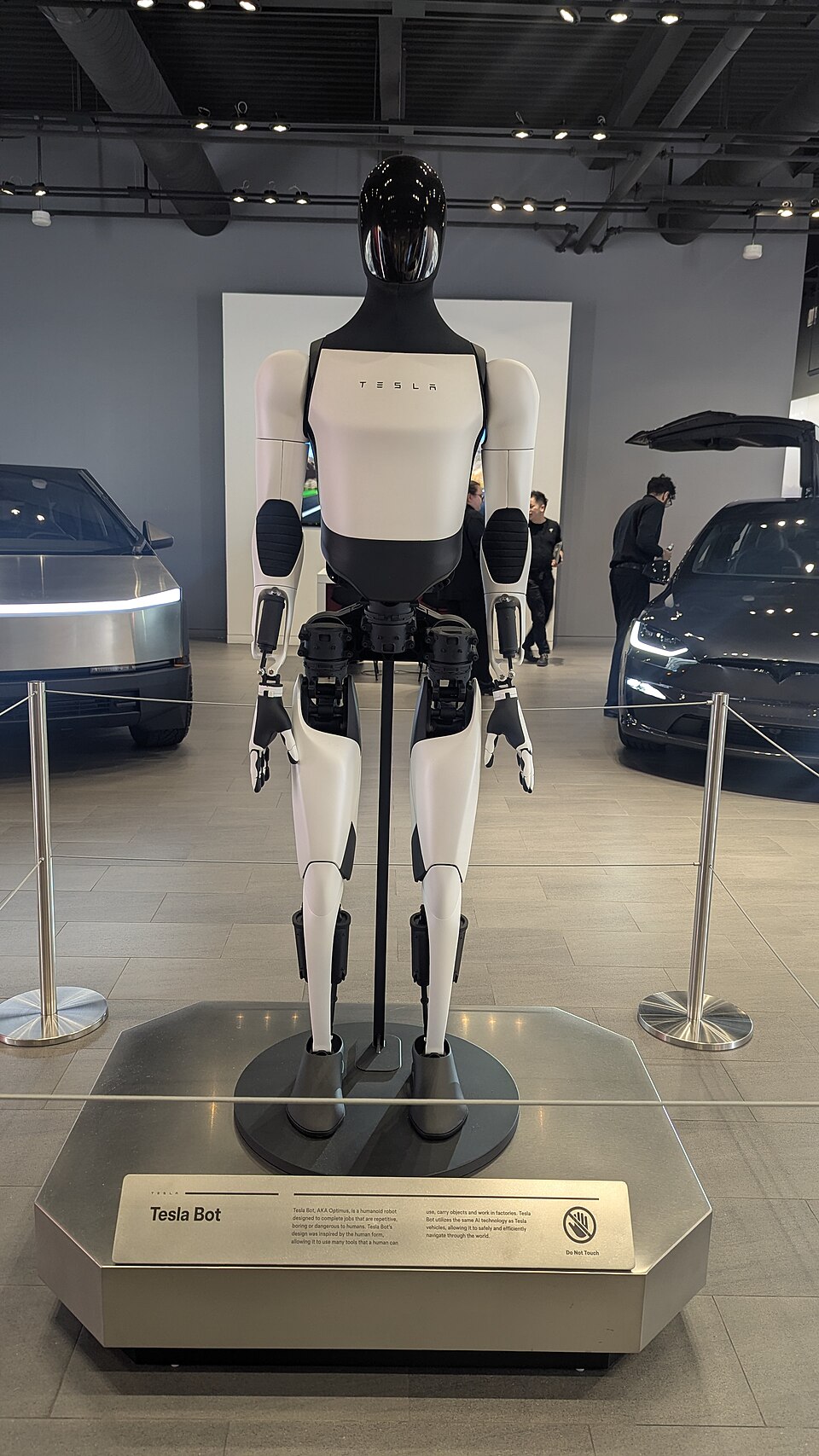
What it does. 5'8" general-purpose humanoid robot. Tesla's plan is to use them in their own factories first, then sell at scale to other manufacturers, and eventually to consumers.
Role in the Mars play
The labor force. Pre-deploy robots build the Mars colony before humans arrive. Optimus uses the same FSD AI stack as Tesla cars, so the same compute trains both.
End goal
1 million units / year by 2030. Multiple billions of units long-term — Musk has said Optimus could be the largest product in human history by units shipped.
Neuralink
Founded 2016$9B (private)
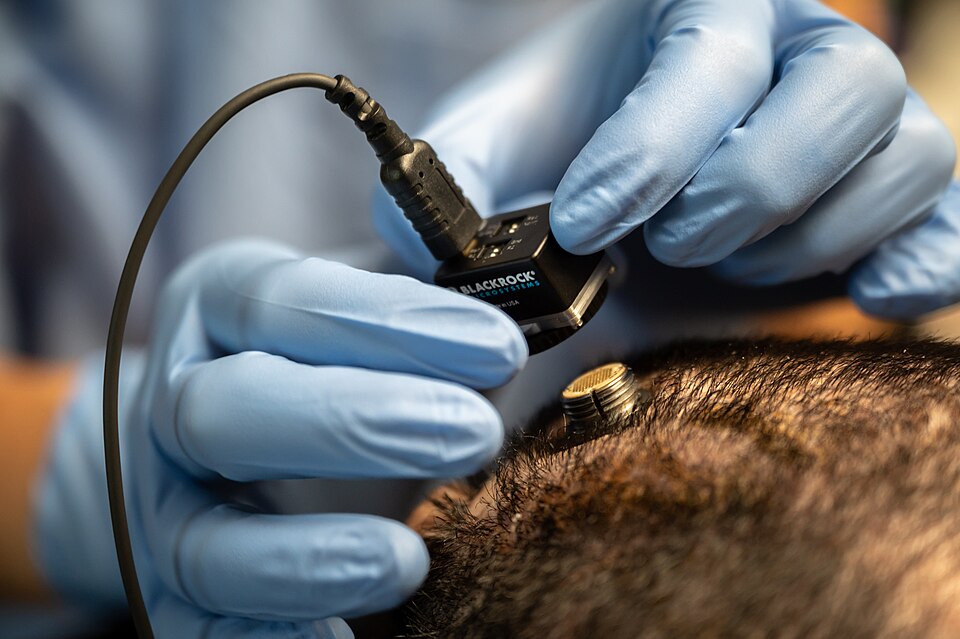
What it does. Implantable brain–computer interface (BCI) called Telepathy. The N1 chip is implanted in the motor cortex via a surgical robot, allowing patients to control devices with their thoughts. First human implant: 2024.
Role in the Mars play
Human cognitive augmentation. In Musk's framing, BCI is necessary for humans to keep up with AI and to function in extreme off-world environments where mechanical limbs and direct neural feedback may be required.
End goal
Enable a high-bandwidth interface between the human brain and computers. Long-term: full sensory and motor restoration for paralysis, blindness, deafness — then enhancement.
The Boring Company
Founded 2016$6B (private)
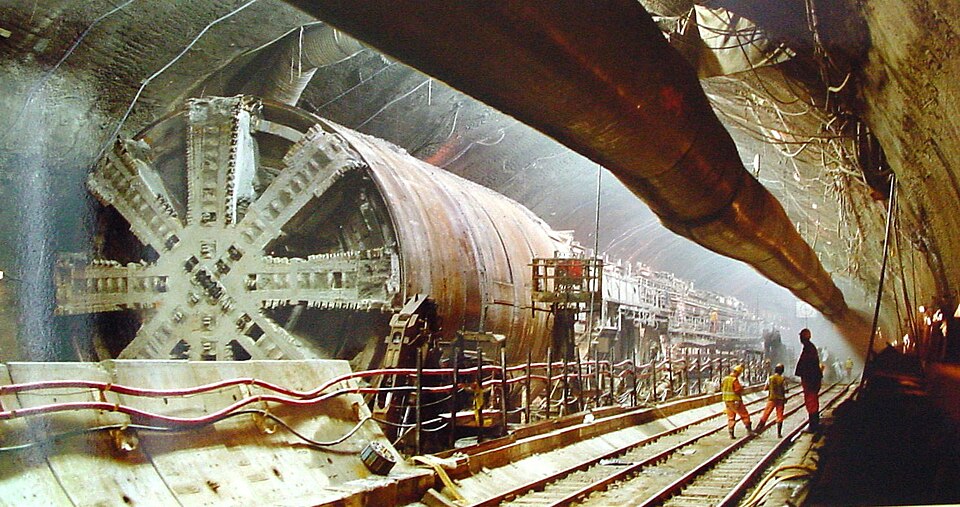
What it does. Builds high-speed underground transit tunnels. Active operations: the Las Vegas Convention Center Loop (with Tesla shuttles), and proposed expansions to LAX, Miami, and Chicago.
Role in the Mars play
Mars surface is hostile — radiation, dust storms, –60°C nights. Permanent habitation will be subsurface. The Boring Company is the dig. Same tunneling technology, different planet.
End goal
Tunnels at $10M/mile (vs. $1B/mile for traditional subway). Eventually: the underground infrastructure for Earth cities and the first Mars colonies.

X (formerly Twitter)
Founded 2006 · acquired 2022~$25B (vs. $44B paid)
What it does. Real-time text, audio, and video social platform with 600M+ monthly active users. Owns the largest source of public conversation data on the internet, which feeds xAI's training.
Role in the Mars play
The information layer. A distributed civilization needs uncensored, real-time global communication. X is also the data source for xAI — every public tweet trains the model.
End goal
Become the global town square + payments + media + financial-services 'everything app' (in the WeChat mold). Long-term: the communication and identity layer for Earth–Mars civilization.
xAI
Founded 2023$250B (Series E, 2026)
What it does. Trains and deploys frontier large language models, branded Grok. Operates Colossus, one of the largest GPU clusters in the world (200K+ H100/H200 equivalents). Integrated directly into X for real-time access.
Role in the Mars play
The brain. Self-sufficient off-world colonies need AGI-level decision support. Also Musk's hedge against an OpenAI-dominated future — and the basis of his lawsuit against OpenAI.
End goal
Build a 'maximally truth-seeking AI' that understands the universe. Practical short-term: catch up to and pass GPT/Claude/Gemini. Long-term: AGI.
In his own words
- "If we can build a self-sustaining city on Mars, the future of humanity is much more secure."
- "There are basically two paths: stay on Earth forever, or become a multi-planet species."
- "I think it's vital to have a self-sustaining city on Mars by 2050."
Keep reading
Elon Musk net worth, live →
Real-time figure with the breakdown by source — Tesla, SpaceX, xAI.
The SpaceX IPO →
Why the SpaceX IPO is the single biggest lever to $1T.
The Tesla 2018 pay package →
What the pay-package fight does to his net worth — both outcomes priced.
Is Elon Musk a trillionaire yet? →
The live answer, the exact gap to $1T, and what closes it.